How to Stop Procrastinating: A Practical Guide That Respects Reality

There is a particular kind of guilt that comes from putting something off. You know the report is due, the email needs sending, the application should be finished, and yet you find yourself reorganizing your desk, checking your phone or suddenly deciding it is the perfect moment to clean the kitchen. Then the evening arrives, the task is still there, and you feel worse than before. If this happens to you often, it helps to know two things: you are in very large company, and the cause is almost never laziness.
Psychologists who study procrastination increasingly describe it as a problem of managing emotions, not managing time. We delay a task because it makes us feel something uncomfortable, such as boredom, anxiety, confusion or fear of doing it badly. Avoiding the task gives immediate relief, and that relief teaches the brain to repeat the pattern. Once you see it this way, the solution changes. You do not need a harsher schedule or more self-criticism. You need ways to make starting feel less threatening.
Work out what you are really avoiding
Before trying any technique, spend a minute asking what exactly feels unpleasant about the task. Often it is one of a handful of things. The task may be unclear, so you do not know where to begin. It may be too large, so it feels impossible to finish. It may be boring, or it may carry a risk of failure or criticism, such as a piece of work that will be judged. Each of these has a different remedy. A vague task needs clarifying, a big one needs breaking down, a boring one needs a reward or a change of setting, and a frightening one needs a lower standard for the first draft. Treating all procrastination with the same trick is why so many productivity systems disappoint.
Shrink the first step until it is almost silly
The hardest moment in any task is the first thirty seconds. After that, momentum usually takes over. So do not aim to write the report; aim to open the document and type the title. Do not plan to clear your inbox; plan to answer the single oldest message. Many people find that once they start, they naturally continue for much longer than they expected. If you do stop after two minutes, that is still a victory compared with doing nothing, and tomorrow's start will feel easier because you have already been in contact with the work.
Use time boxes, not endless sessions
Telling yourself you will work on something until it is done is a heavy promise, and the brain resists heavy promises. A time box is far lighter. Set a timer for twenty-five minutes, work on only one thing, and allow yourself a short break at the end. The finish line is close enough to be believable. Some people prefer shorter sprints of fifteen minutes for tasks they dread most. What matters is that the commitment is small, specific and temporary, so your mind has less to argue against.
Lower the standard for the first version
Perfectionism is a quiet cause of delay. If you believe the first attempt must be good, then starting means risking a bad result, so you wait for the right mood, which never quite arrives. Give yourself explicit permission to write something rough. Tell yourself you are producing a bad first draft on purpose, because bad drafts can be improved and blank pages cannot. This single change helps writers, students, designers and professionals in almost every field, because it separates the act of creating from the act of judging.
Reduce the friction around starting
Notice what makes starting harder than it needs to be. Perhaps your phone is within reach, your files are scattered, or you have to open four programs before you can begin. Remove those obstacles before the work session. Put the phone in another room, set out what you need the evening before, and keep the document open so it greets you in the morning. At the same time, add friction to the distractions you reach for, such as logging out of social media or putting apps in a folder on the last screen. Small changes to your surroundings are usually more reliable than a surge of willpower.
Plan for the version of you who feels tired
It is tempting to schedule difficult tasks when you imagine yourself fresh and energetic, but the person who actually shows up is often tired and distracted. Plan the way you would for a friend who is having an average day. Put the hardest task in the part of the day when you tend to think most clearly, keep the plan short, and leave a little slack for interruptions. A plan that assumes a perfect day will fail on an ordinary one, and that failure feeds the very guilt that fuels procrastination.
Treat yourself kindly when you slip
Research on self-compassion suggests that people who forgive themselves for putting something off are actually less likely to procrastinate on the next occasion than those who beat themselves up. Harsh self-criticism adds a new unpleasant feeling to the task, which makes avoidance more tempting. When you notice you have been delaying, treat it as information, not as a verdict. Ask what made it hard, make the first step smaller and begin again. Over time, this approach builds trust in yourself, and that trust is worth more than any scheduling app.
A simple routine to try this week
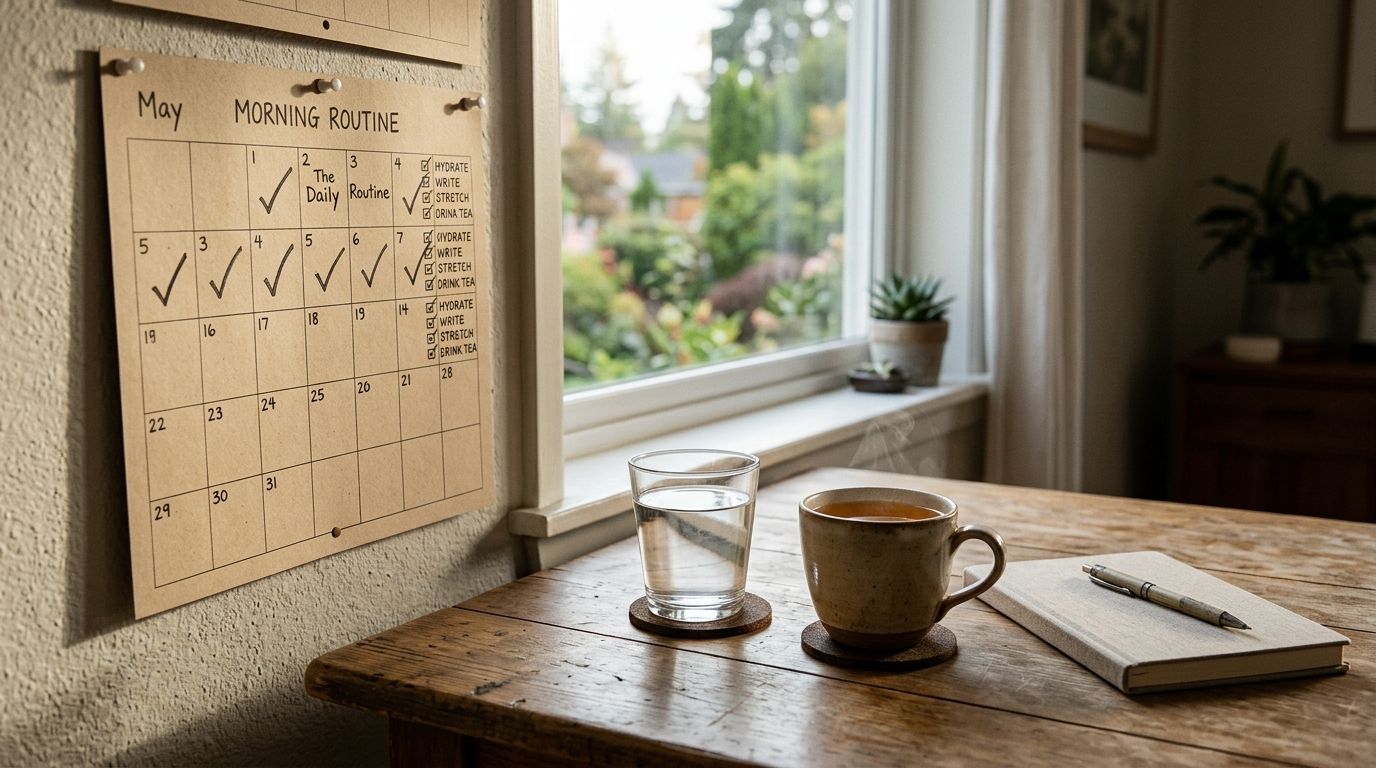
Pick one task you have been avoiding. Write down in one sentence what feels uncomfortable about it. Decide the smallest possible first action, one that takes under five minutes. Set a timer for that action and begin before you can talk yourself out of it. When the timer ends, you are free to stop or to continue for another round. Repeat this with one task a day. In a couple of weeks you will probably notice that starting has become less of a battle, and that the dread you used to feel around certain tasks has lost some of its power.
This article is for general information and is not professional advice. See our disclaimer.


0 Comments
No comments yet. Be the first to share your thoughts.
Leave a comment
Your email address will not be published. Comments are reviewed before they appear.