How to Prepare for a Job Interview When You Are Nervous

Feeling nervous before an interview is not a sign that you are unprepared, and it is certainly not a sign that you will do badly. It usually means that you care about the outcome. Almost everyone feels it, including people who interview for a living. The difference between candidates who come across well and those who do not is rarely about confidence in the moment. It is mostly about the preparation done in the days before, because preparation turns a frightening unknown into a conversation you have already partly rehearsed. Here is a calm, practical way to get ready.
Understand the role before you try to sell yourself
Begin by reading the job advertisement slowly, more than once. Underline the responsibilities that appear first and most often, since those are what the employer cares about most. Then ask yourself what problem they are really trying to solve by hiring someone. A company hiring a customer support agent wants calm, accurate answers and happy customers; a company hiring a bookkeeper wants accuracy and reliability. When you know the problem, you can talk about your experience in a way that is actually relevant, instead of reciting your whole history and hoping something fits.
Research the company properly
Spend an hour on the company's website, its social pages, recent news and, if relevant, its customers' reviews. You want to understand what they sell, who they serve, how they describe their own values and what has changed recently, such as a new product or a new market. Write a few notes in your own words. This gives you something genuine to say when they ask why you want to work there, and it allows you to ask better questions at the end. Interviewers can easily tell the difference between someone who has read a company's homepage and someone who understands what the business is trying to do.
Prepare stories, not memorized answers
Most interviews include questions like "tell me about a time when you handled a difficult situation" or "describe a project you are proud of." The easiest way to answer them well is to have five or six real stories ready from your past work, study or volunteering. A simple structure helps: briefly describe the situation, explain what your task was, say what you did, and finish with the result. Choose stories that show different strengths, such as solving a problem, working with a difficult person, meeting a deadline, learning something quickly and recovering from a mistake. The point is not to memorize a script, which usually sounds stiff. It is to know your material well enough that you can adapt it to whatever question comes.
Plan your answer to the questions everyone gets
Some questions appear in almost every interview. "Tell me about yourself" is not an invitation to share your life story; it is a request for a short professional summary of about a minute, covering what you do now, what you have done that is relevant, and why this role interests you. "What are your strengths?" calls for one or two real strengths with an example. "What are your weaknesses?" is best answered with a genuine, manageable weakness and what you are doing to improve it, not a disguised strength such as "I work too hard." And if you are asked why you left your last job, stay factual and respectful. Speaking badly about a former employer, even if it is deserved, almost always leaves a poor impression.
Practice out loud
Thinking an answer through is very different from saying it. Say your answers aloud, in front of a mirror, into your phone's voice recorder or to a friend. You will quickly notice where you ramble, where you go quiet and which phrases feel unnatural. A couple of rounds of this make a surprising difference to how fluent you sound on the day. Aim for answers of about one to two minutes, long enough to be useful and short enough to keep the interviewer engaged.
Prepare questions of your own
At the end of most interviews you will be asked whether you have questions, and "no" is a missed opportunity. Good questions show curiosity and seriousness. You might ask what success would look like in the first three months, what the team's biggest current challenge is, how performance is reviewed or what the person who did this job before went on to do. Avoid asking about salary or holidays in a first conversation unless the interviewer brings it up, and avoid questions that could be answered from the company's website.
Handle the practical details early
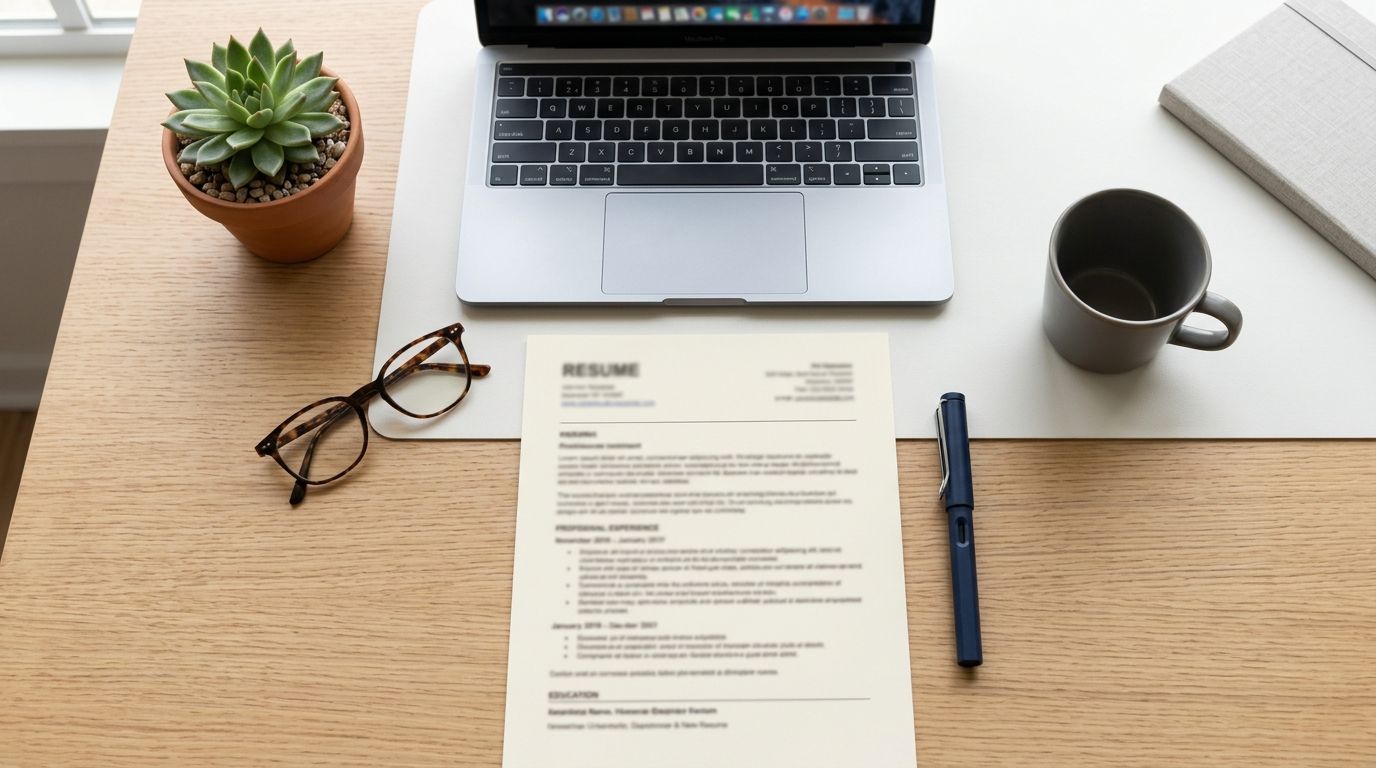
Many interview problems are logistical. Confirm the time, place and the name of the person you are meeting. Plan your route and aim to arrive about ten minutes early, because rushing is the fastest way to feel more nervous. For online interviews, test your camera, microphone and internet connection the day before, choose a quiet spot with plain background and decent lighting, and close other programs. Lay out clothes that are clean, comfortable and a little smarter than what people wear in the role day to day. Bring extra copies of your resume, a notebook and a pen.
Managing the nerves themselves
A few simple habits can make the feeling easier to handle. Sleep properly the night before, since being rested helps more than last-minute cramming. Eat something light so that you are not distracted by hunger. Before you walk in, breathe slowly, in through the nose for four counts and out for six, a few times; it gently calms the body. During the interview, it is perfectly acceptable to pause for a moment before answering a hard question, and to say "that is a good question, let me think for a second." Interviewers usually read a short pause as thoughtfulness, not weakness. And if you make a mistake or lose your train of thought, simply say so and continue. Recovering calmly shows a trait employers value highly.
After the interview
Within a day, send a short thank-you message to the interviewer. Keep it brief: thank them for their time, mention one specific thing you enjoyed discussing, and restate your interest in the role. Then, whatever the outcome, write down what went well and what you would change. Every interview, successful or not, gives you material to improve the next one. Candidates who treat interviews as a skill to practice, rather than a verdict on their worth, tend to get steadily better, and the nerves tend to fade with them.
This article is for general information and is not professional advice. See our disclaimer.

0 Comments
No comments yet. Be the first to share your thoughts.
Leave a comment
Your email address will not be published. Comments are reviewed before they appear.